Publish Date: 03-06-2026
Auto Insurance
Last Updated: 09-06-2026
SR-22 vs. Regular Car Insurance: What is the Difference?
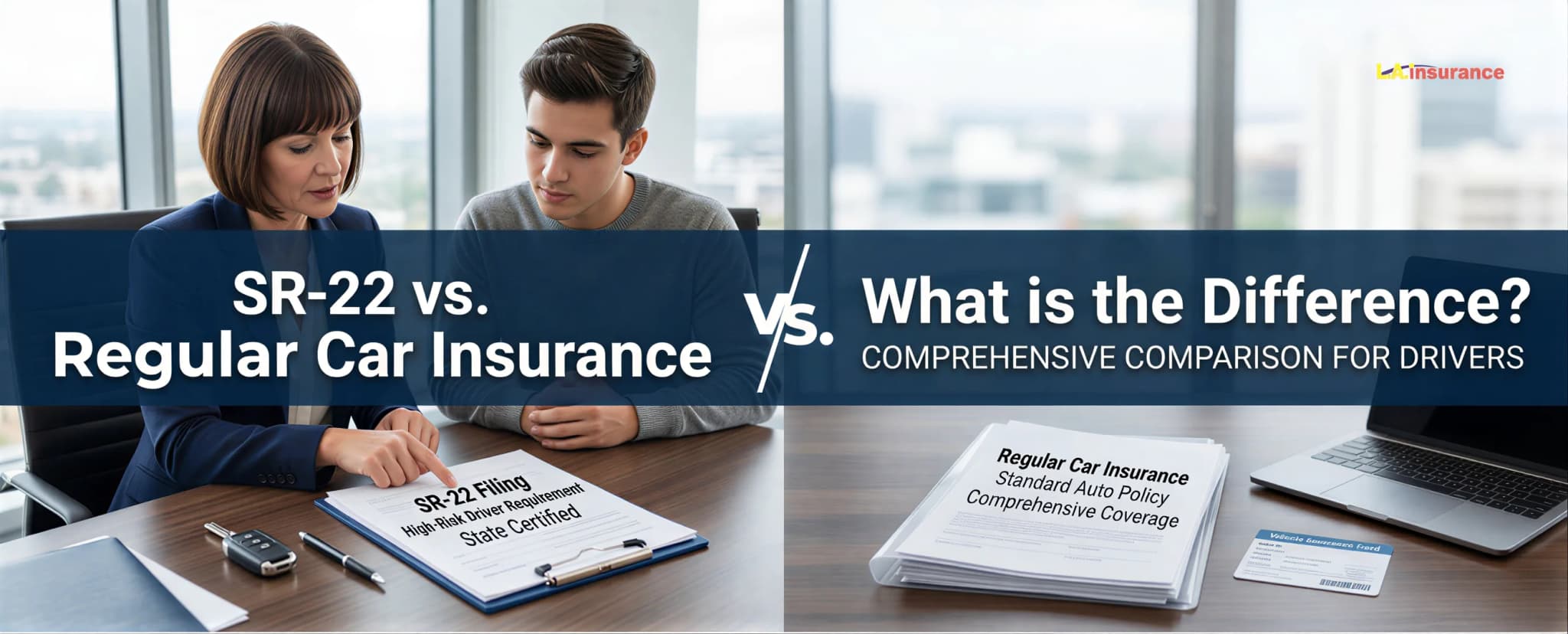
Many drivers think SR-22 is a special type of car insurance. However, that is not exactly true. An SR-22 is a form, often called SR-22 insurance, that your insurance company files with the state to prove you carry the required car insurance coverage.
Regular car insurance helps pay for injuries, property damage, or vehicle repairs after a covered accident. An SR-22, on the other hand, is usually required after serious driving violations like a DUI, driving without insurance, or repeated traffic offenses.
Since SR-22 requirements can affect your insurance rates, driving privileges, and coverage options, every conscious driver should know about it. So, in this article, we’ll compare SR-22 and regular auto insurance, explain why SR-22 coverage often costs more, and answer common questions drivers have about SR-22 filings.
What Is the Difference Between SR-22 and Regular Car Insurance?
Regular car insurance is a policy that helps cover injuries, property damage, and other losses after a covered accident. Most states require drivers to carry at least minimum liability coverage to drive legally.
An SR-22 is different. It is not an insurance policy at all. It’s a certificate your insurance company files with the state to confirm you’re carrying the state-mandated auto coverage. Drivers are usually required to carry an SR-22 after serious traffic violations or license suspensions.
In many cases, you can keep the same type of auto insurance coverage with an SR-22 filing attached to your policy. However, drivers with SR-22 requirements are often considered high risk by insurance companies, which is why their premiums increase.
Here’s a quick comparison between SR-22 filings and regular auto insurance coverage:
Feature | Regular Car Insurance | SR-22 Requirement |
Purpose | Helps pay for covered losses after accidents | Proves you carry state required insurance |
Required for most drivers | Yes | No |
Filed with the state | Usually no | Yes |
High-risk designation | Not always | Usually yes |
Effect on insurance rates | Depends on driving history | Often increases premiums |
Coverage options | Liability, collision, comprehensive | Same coverage options may still apply |
SR-22 Is Not a Separate Insurance Policy
An SR-22 filing does not replace your existing auto insurance policy. Instead, your insurance company adds the filing to your current coverage and sends proof to the state.
That’s why you can usually keep the same types of car insurance coverage you already have. For example, some drivers carry only the state minimum liability coverage, while others choose full coverage for additional protection.
However, not all insurance companies file SR-22 forms. Some insurers do not cover high-risk drivers at all. So, you may need to shop around if you are required to carry an SR-22.
Why Does SR-22 Insurance Usually Cost More?
The SR-22 filing itself is usually inexpensive. In many states, the filing fee is around $15 to $50. However, drivers with an SR-22 pay higher car insurance rates than those with regular auto insurance because insurance companies consider them higher risk.
In most cases, an SR-22 requirement follows serious driving violations like DUI convictions, reckless driving, repeated traffic offences, or driving without insurance. Because of this, insurers may see a greater chance of future claims or policy lapses. As a result, premiums often increase after the violation, not because of the SR-22 form alone.
Your rates may also depend on factors like:
- The type of violation on your driving record
- Your age and location
- Previous accidents or claims
- Coverage limits and deductibles
- How long the SR-22 requirement lasts
According to The Zebra, drivers with SR-22 filings may pay anywhere from $348 to $1,218 more per year compared to standard auto insurance rates, depending on the violation involved. Forbes also reports that the national average cost of SR-22 insurance is about $3,295 annually.
It’s also important to keep in mind that some insurance companies do not insure high-risk drivers at all. So, if you’re a driver with SR-22 requirements, you may have fewer coverage options and higher quotes compared to drivers with standard auto insurance policies.
Can You Have Full Coverage With an SR-22?
Yes, you can still carry full coverage car insurance with an SR-22 filing, and it does not limit you to minimum liability coverage only. An SR-22 simply proves to the state that you meet the required car insurance requirements.
You can usually add collision and comprehensive coverage to your policy the same way you would with a standard auto policy. Collision coverage helps pay for damage to your vehicle after an accident, while comprehensive coverage may cover theft, vandalism, weather damage, animal collision, or other non-collision events.
However, coverage options may depend on a few important factors, including:
- Your driving history and violation type
- The insurance company’s underwriting rules
- Whether your car is financed or leased
- Your state’s minimum coverage requirements
- Your budget and deductible choices
In addition, many lenders require drivers with financed or leased vehicles to carry both collision and comprehensive coverage, even if they also need an SR-22 filing. The NAIC states that collision and comprehensive coverage are often required by lenders because they help protect the vehicle itself.
It’s also important to understand that “full coverage” is not an official insurance policy type. Most insurance companies use the term to describe a combination of liability, collision, and comprehensive coverage.
If you need help finding affordable full coverage auto insurance with an SR-22 filing, you can call us at (800) 893-9393 or contact our insurance agents. We can review your driving profile, explain your coverage options, and help you compare policies that meet your state’s insurance requirements.
How Long Do You Need an SR-22?
In most states, drivers usually need to keep an SR-22 filing for about three years. However, the exact requirement depends on your state laws and the type of driving violation involved.
Your insurance company must keep the SR-22 filing active during the required period. If your policy is canceled, lapses, or expires, the insurer may notify the state. Consequently, your license could be suspended again, or your SR-22 requirement could restart.
So, it’s really important to maintain continuous car insurance coverage until the state officially removes the SR-22 requirement from your driving record.
Final Thoughts on the Difference Between SR-22 and Regular Car Insurance
To recap what you’ve read so far, regular auto insurance helps protect you financially after a covered accident. An SR-22, however, is simply a state filing that proves you carry the required car insurance coverage. While drivers often call it “SR-22 insurance,” it is not a separate insurance policy.
The main difference is that drivers with SR-22 requirements are usually considered higher risk, which can lead to higher insurance rates and fewer coverage options. However, you can still choose the same types of coverage available with a regular auto insurance policy.
SR-22 Form Vs. Standard Auto Insurance FAQs
Do I need SR-22 insurance and regular insurance?
No. An SR-22 is not a separate insurance policy. It is a filing attached to your regular auto insurance policy to prove you meet your state’s car insurance requirements.
Who needs SR-22 insurance in Michigan?
Michigan drivers may need an SR-22 after serious driving violations such as DUI convictions, driving without insurance, repeated traffic offenses, or license suspensions. A court or the state usually notifies drivers when an SR-22 filing is required.
Is an SR-22 the same thing as standard auto insurance?
No. Standard auto insurance is the actual policy that provides coverage for accidents, injuries, or property damage. An SR-22 is simply a certificate filed with the state to show you carry the required insurance coverage.
Why is SR-22 cheaper than my current insurance?
In some cases, drivers lower their coverage limits to meet only the state minimum requirements after needing an SR-22. As a result, the policy may cost less than a previous full coverage insurance policy. However, many SR-22 drivers still pay higher rates because of their driving record.
Editorial Disclaimer
The resources on this blog are researched and created by experienced insurance writers, then fact-checked and verified for accuracy to provide clear, general informational guidance. This content does not constitute professional insurance, legal, or financial advice. Coverage options and premium rates are subject to individual eligibility, underwriting guidelines, and state availability. For specific questions regarding your policy or to get an accurate quote, please contact a licensed L.A. Insurance agent directly. We're an independent agency and not a direct insurance carrier. For more information on how we operate and handle your data, please see our Terms and Conditions and Privacy Policy.
Tag :
fast car insurance
cheap car insurance
car maintenance

Does Renters Insurance Cover Roommates?
Whenever you rent an apartment with roommates, you typically split utility bills and other shared expenses.

Does Gap Insurance Help You Get a New Car?
No, GAP Insurance does not buy you a new car.
SR-22 vs. SR-21 vs. SR-26: What is the Difference?
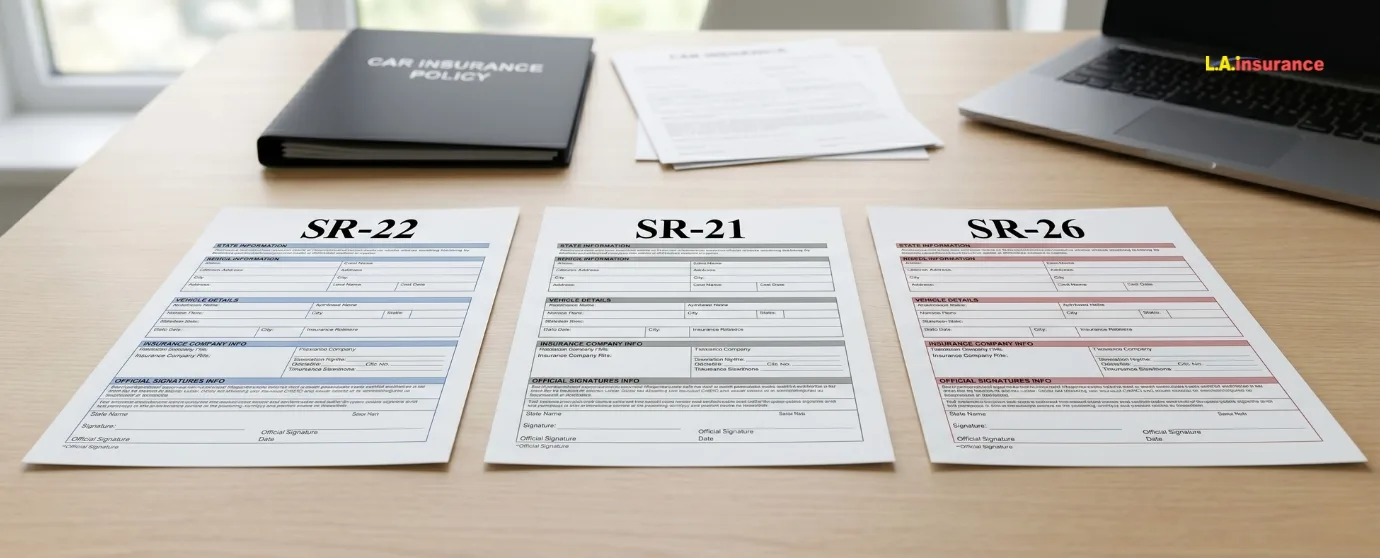
SR-21, SR-22, and SR-26 are all insurance-related forms used by states and insurance companies.
What Is an SR-26 Form
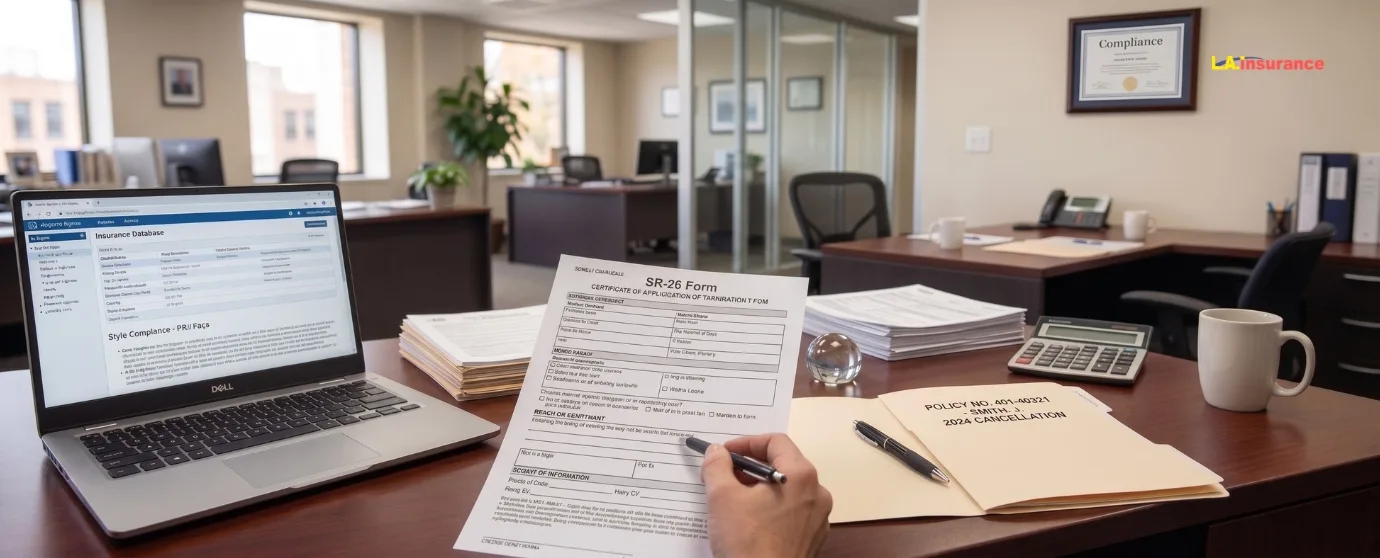
An SR-26 form is a notice your insurance company sends to the state to report that your SR-22 coverage has ended, expired, or been canceled.
SR-22 vs. Regular Car Insurance: What is the Difference?
Many drivers think SR-22 is a special type of car insurance. However, that is not exactly true.

How Long Does a Car Insurance Claim Take?
Most car insurance claims take anywhere from a few days to several weeks. However, the exact timeline depends on the type of accident, the severity of the damage, whether injuries are involved, and how quickly the insurance company can complete its investigation. Simple claims with clear fault are usually resolved faster than complex ones.