Publish Date: 14-09-2026
Auto Insurance
Does Insurance Cover a Tree Falling on Your Car?
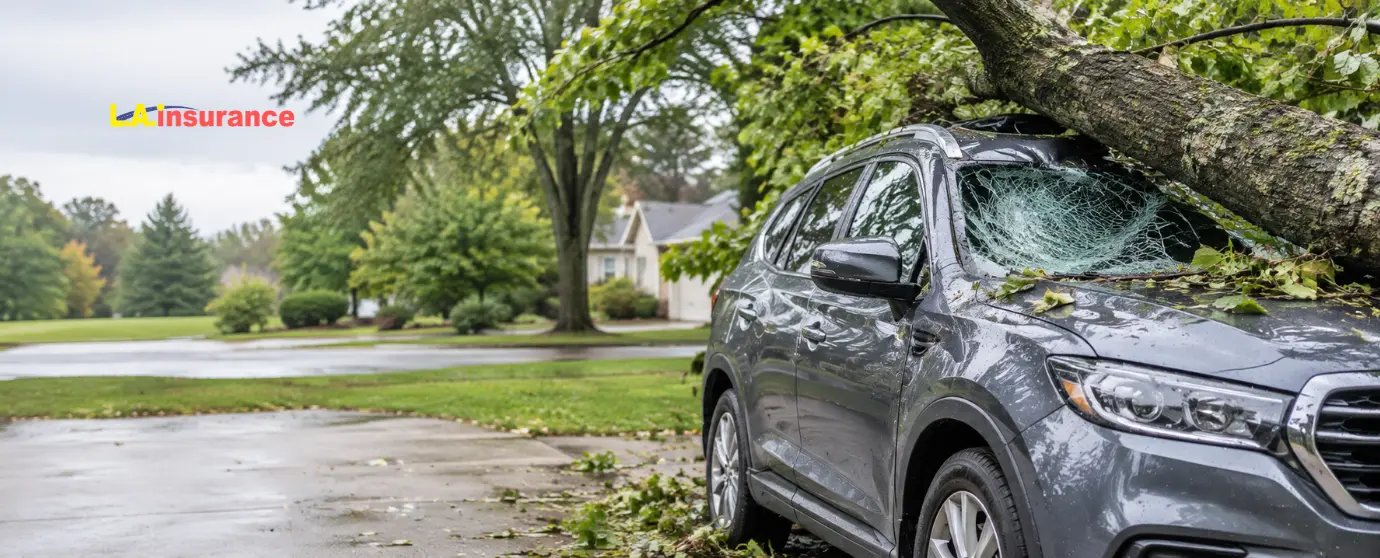
Whether your car is parked out in the open under or near a tree, or you’re driving when a tree suddenly falls on your car, either way, it can leave your car severely damaged or even wrecked.
In such cases, would your auto insurance policy cover your car? Well, yes, if you have comprehensive coverage. However, coverage can work differently depending on the situation, such as whether the tree falls directly on your car or you hit a fallen tree while driving. There are also a few other coverage options that can provide additional protection.
Although incidents like a falling tree aren’t something that happens every day, they can happen, so it’s best to stay prepared. In this guide, you’ll learn how car insurance can cover tree damage, what situations may affect your coverage, how to file a claim, and what you can do to protect your car.
What Happens If a Tree Falls on Your Car?
If a tree falls on your car, it can instantly break your car’s windshield and side mirrors and severely damage the car’s hood, sunroof, and even the engine. Incidents like this can happen, especially during hurricanes, severe storms, or heavy snow. Depending on the severity of the impact, the damage can range from minor dents and scratches to extensive damage to your car’s body, engine, and electrical system. In some cases, the repair costs can be substantial, particularly if the tree causes significant structural damage.
On top of that, if your car is trapped under a tree, you may also need to arrange for the tree to be safely removed before your vehicle can be accessed. Worst of all, if your car is totaled and beyond economical repair, you may need to replace it with another vehicle.
The good news is that your auto insurance may help cover the damage to your car if you have the right coverage. Let’s get into the details so you can understand what coverage may apply and make the right choice.
How Does Car Insurance Cover Damage if a Tree Falls on Your Car?
It actually depends on the situation. If a tree falls directly on your car while you’re driving or parked, comprehensive coverage may apply. However, if you hit a fallen tree while driving, collision coverage may apply. The type of coverage that applies depends on how the damage occurred and the coverage included in your policy.
Comprehensive Coverage
If a tree falls directly on your car, comprehensive coverage is generally the coverage that can help pay for the resulting damage. It protects your vehicle against certain non-collision events, including falling objects, severe weather, and other unexpected incidents.
For example, if a tree falls on your car while it’s parked in your driveway, at work, or on the street, comprehensive coverage may help pay to repair the damage, subject to your policy’s deductible and coverage limits. The same may apply if a large branch falls onto your vehicle and damages the windshield, roof, hood, or other parts of the car.
However, you’ll typically have to pay your comprehensive deductible before your insurance pays the remaining covered repair costs. If the damage is severe enough to total your car, your insurer may instead pay its covered actual cash value, minus your deductible, rather than paying for repairs.
Collision Coverage
Collision coverage generally applies when your car collides with another vehicle or object, rather than when a tree simply falls directly onto your car. For example, if you’re driving and hit a tree that has already fallen onto the road, collision coverage may help pay for the resulting damage, subject to your policy’s deductible and coverage limits.
However, if a tree falls directly onto your car while you’re driving, comprehensive coverage may apply instead. The key difference is how the damage occurs: comprehensive coverage generally covers certain non-collision events, while collision coverage is designed for damage caused when your vehicle hits another vehicle or object.
Situations That May Affect Your Coverage
If you’re considering purchasing auto insurance or reviewing your existing policy, it’s important to understand the situations that may affect your coverage. Here are some common situations to help you understand which coverage may apply.
Situation | Coverage That May Apply |
A neighbor's tree falls on your car | Your comprehensive coverage may help cover the damage. If the neighbor's negligence caused the tree to fall, their liability coverage may apply. |
A tree falls on your car during a storm | Comprehensive coverage may help cover damage caused by the falling tree or branches, subject to your deductible and policy terms. |
You hit a fallen tree while driving | Collision coverage may help cover the damage because your vehicle collided with an object. |
Other Types of Car Insurance Coverage That Can Help with Falling Tree Damage
Even though comprehensive coverage may help cover a significant portion of the damage when a tree suddenly falls on your car, it may still not be enough to cover your entire financial loss. So, it may be helpful to consider additional coverage options, such as rental car reimbursement, gap insurance, and new car replacement coverage.
Rental Car Reimbursement Coverage
If a tree damages your car and it needs to stay in the repair shop for a while, rental car reimbursement coverage may help pay for the cost of a temporary rental vehicle. This coverage can help you maintain your daily routine while your car is being repaired after a covered loss.
The amount your insurer pays typically depends on the coverage limits and terms of your policy. For example, your policy may provide a specific daily limit and a maximum number of days for rental expenses. Generally, coverage may provide around $30 per day for 30 to 45 days or more, but the exact limits can vary among insurers. Keep in mind that rental car reimbursement coverage generally applies only when the underlying damage is covered by your policy.
Gap Insurance Coverage
If your car is totaled after a tree falls on it, you could end up owing more on your auto loan or lease than your insurance company pays for the vehicle. This can happen if your car has depreciated faster than you’ve paid down the loan. That’s where gap insurance can help. It may cover the difference between your car’s actual cash value and the amount you still owe on your loan or lease, subject to the terms of your policy.
For example, if your car is worth $20,000 but you still owe $24,000, gap insurance may help cover the $4,000 difference after a covered total loss. However, gap insurance doesn’t pay to repair your car or cover the tree damage itself; that’s usually covered by comprehensive or collision coverage. It’s designed to help you avoid paying out of pocket for the remaining loan or lease balance after your car is totaled.
New Car Replacement Coverage
If you’ve recently purchased a new car, having it totaled by a falling tree can leave you facing a significant financial loss. A standard comprehensive claim typically pays your car’s actual cash value, which accounts for depreciation. This means the payout may be less than what you originally paid for the vehicle.
New car replacement coverage can provide additional protection for newer vehicles. If your car qualifies under your insurer’s requirements, this coverage may help pay to replace a totaled vehicle with a new one of the same or similar make and model, subject to your policy terms and limits.
Insurers generally consider a car ‘new’ when it’s around 1 to 2 years old or has relatively low mileage, often around 15,000 to 24,000 miles. However, eligibility requirements and replacement benefits vary among insurers. Check your policy to see whether your vehicle qualifies and what the coverage would pay if it’s totaled after a covered loss.
Will Car Insurance Cover Tree Damage with Minimum Coverage?
In most states, minimum coverage includes liability coverage, and in no-fault states like Michigan and Florida, you may also need PIP coverage and other mandatory coverages. Unfortunately, these state-required auto insurance coverages aren’t designed to cover your car’s repair or replacement costs.
So, if a tree falls on your car and damages it, you’ll generally have to pay for the damage out of pocket unless you have the appropriate physical damage coverage, such as comprehensive or collision coverage.
How to File a Claim for a Tree Falling on Your Car
If a tree falls on your car, knowing what to do next can make the claims process easier. Before filing a claim, make sure you’re in a safe location and avoid approaching the tree if there are downed power lines or other hazards nearby.
Here are the steps you can follow to file a claim:
- Check for injuries and move to safety: If anyone is injured, seek medical help immediately. If it’s safe to do so, move away from the damaged vehicle and fallen tree.
- Take photos and videos: Document the damage to your car, the fallen tree, broken branches, and the surrounding area. Take pictures from multiple angles if it’s safe.
- Contact your insurance company: Report the incident to your insurer as soon as possible and provide details about what happened, where your car was located, and the damage you can see.
- Ask about your coverage and deductible: Your insurer can confirm whether comprehensive or another coverage applies and explain your deductible and coverage limits.
- Comply with the inspection process: Your insurance company may need to inspect your vehicle or ask you to take it to an approved repair shop to assess the damage. Keep your receipts and documents: Save receipts for towing, temporary transportation, or other expenses related to the covered loss, as your policy may provide reimbursement for some of these costs.
- Wait for the claim decision: Once your insurer reviews the damage and determines the applicable coverage, they can explain whether the vehicle will be repaired or considered a total loss and what happens next.
Will a Tree Falling on Your Car Increase Your Insurance Rates?
If a tree suddenly falls on your car and you had nothing to do with it, then no, your rates may not increase. Generally, car insurance rates don’t increase for claims that are covered by comprehensive coverage.
However, in some cases, they may. According to the Zebra, your first comprehensive coverage claim may increase your rates by 5%. On the other hand, if you ended up crashing into a fallen tree, then your rates may increase a lot more depending on your situation, whether you were at fault or not, along with your driving, insurance claims history, and other important factors.
How to Prevent a Tree From Falling on Your Car
While you can’t always prevent a tree from falling on your car, you can take some precautions to reduce the risk of damage. Here are a few things you can do.
- Avoid parking under or near large trees: Whenever possible, park your car away from large trees, especially those that look weak, damaged, or unstable.
- Look for signs of tree damage: Keep an eye out for dead branches, cracks in the trunk, leaning trees, or other signs that a tree may be unstable.
- Trim trees around your property: Regularly trim dead or weak branches that could fall during strong winds, heavy rain, snowstorms, or other severe weather.
- Park in a garage when possible: Parking your car inside a garage can provide an extra layer of protection from falling trees and branches during severe weather.
- Check the weather before parking outside: If severe weather, strong winds, or a storm is expected, move your car to a safer location away from trees and other objects that could fall on it.
Bottom Line: Does Car Insurance Protect You From Tree Damage?
Yes, car insurance does protect you from tree damage, but only if you have the right coverage, such as collision and especially comprehensive coverage. The thing is, you can never really predict when a tree may fall onto your car or when you may accidentally crash into one.
If a tree falls onto your car, then there’s a high chance that it may get severely damaged or totaled, and you may face either significant repair costs or need to get a new car. Either way, it’s a hefty financial loss unless you’re properly insured.
If you’re currently shopping for insurance or exploring better coverage options at a more affordable rate, you can contact us for expert advice and a free quote. Hurry up and get insured today so you’re prepared even if your car gets hit by a tree tomorrow.
Frequently Asked Questions (FAQs)
Will my insurance pay if a tree falls on my car?
Yes, your auto insurance may pay for the damage if a tree falls on your car, but you generally need comprehensive coverage. Comprehensive coverage may help pay to repair or replace your car after a tree falls on it, subject to your deductible, coverage limits, and policy terms. If you hit a fallen tree while driving, collision coverage may apply instead.
Does a tree falling on a car count as an accident?
Yes, a tree falling on your car can be considered an accident, but it’s generally treated differently from a collision caused by your driving. If a tree falls directly onto your car, comprehensive coverage may apply since it’s considered a non-collision event. However, if you hit a fallen tree while driving, collision coverage may apply since your car collided with an object.
Will my car insurance go up if I hit a tree?
Yes, your car insurance rates may go up if you hit a tree, especially if you’re found at fault for the accident. If you have collision coverage, it may help pay for the damage to your car, but filing a claim can sometimes affect your insurance rates.
Do I need a police report if a tree falls on my car?
Not necessarily. Whether you need a police report after a tree falls on your car can depend on the situation, your location, and your insurance company’s requirements. If there are injuries, significant damage, downed power lines, or other safety concerns, you may need to contact the appropriate authorities. It’s also a good idea to check with your insurer to find out whether a police report is required when filing your claim.
What happens if a tree falls on your car during a storm?
If a tree falls on your car during a storm, comprehensive coverage may help pay for the damage, including damage to your roof, windshield, hood, or other parts of your car. You’ll typically have to pay your comprehensive deductible before your insurer covers the remaining repair costs. If the damage is severe enough to total your car, your insurer may pay its actual cash value, minus your deductible, based on your policy terms.
Editorial Disclaimer
The resources on this blog are researched and created by experienced insurance writers, then fact-checked and verified for accuracy to provide clear, general informational guidance. This content does not constitute professional insurance, legal, or financial advice. Coverage options and premium rates are subject to individual eligibility, underwriting guidelines, and state availability. For specific questions regarding your policy or to get an accurate quote, please contact a licensed L.A. Insurance agent directly. We're an independent agency and not a direct insurance carrier. For more information on how we operate and handle your data, please see our Terms and Conditions and Privacy Policy.
Tag :
Auto insurance
cheap insurance
cheap car insurance
fast car insurance
Does Insurance Cover a Tree Falling on Your Car?
Whether your car is parked out in the open under or near a tree, or you’re driving when a tree suddenly falls on your car, either way, it can leave your car severely damaged or even wrecked.
Does Car Insurance Cover Snow Damage?
Your car is more susceptible to damage in winter when it snows. As long as it’s out in the open, it can get damaged by snow at any moment.
Does Auto Insurance Cover Pets in the Car?
Whether you regularly drive with your pets in the car or only take them along occasionally, it’s worth knowing whether your auto insurance covers them.
Do You Need Car Insurance to Cover Road Trips?
If you’re wondering whether your standard auto insurance covers road trips, the good news is that it typically does.
Mechanical Breakdown Insurance: What Is It, and How Does It Work?
One of the biggest risks of owning a car is sudden mechanical failure, and the worst part is it can happen at any time.
What is Custom Parts and Equipment Coverage for Car Insurance?
If you've recently modified your car with custom parts or aftermarket accessories, it's worth reviewing your auto insurance policy to make sure those upgrades are properly covered.